Ted Stankowich

@tedstankowich.bsky.social

Professor & Curator @ Cal State Univ Long Beach Evol Behavioral Ecol of armor, weaponry, aposematism, antipredator behavior, urban ecology https://www.csulb.edu/mammal-lab Creator https://themammallab.com/ an online mammalogy lab manual #TautonymTuesday

Itโ€™s #TautonymTuesday! Meet ๐ถ๐‘Ž๐‘ก๐‘œ๐‘ ๐‘ก๐‘œ๐‘š๐‘ข๐‘  ๐‘๐‘Ž๐‘ก๐‘œ๐‘ ๐‘ก๐‘œ๐‘š๐‘ข๐‘ , the longnose sucker. This fish is found across northern N America & Eurasia, inhabiting cold lakes, rivers, & streams. Its elongated snout helps it forage along the bottom for aquatic insects and other inverts. #Systematics Photo: Dustin Snider

Bild

Itโ€™s #TautonymTuesday! Meet iconic ๐‘‰๐‘ข๐‘™๐‘๐‘’๐‘  ๐‘ฃ๐‘ข๐‘™๐‘๐‘’๐‘ , the red #fox. Found across much of the N Hemisphere, it is the world's most widespread wild #canid. Its adaptability allows it to thrive in habitats ranging from forests and grasslands to farms and even cities. #TaxonomyTuesday #Systematics

Red Fox in Snow

ALT: Red Fox in Snow

static.klipy.com

Itโ€™s #TautonymTuesday! Meet ๐‘๐‘ฆ๐‘๐‘ก๐‘–๐‘๐‘œ๐‘Ÿ๐‘Ž๐‘ฅ ๐‘›๐‘ฆ๐‘๐‘ก๐‘–๐‘๐‘œ๐‘Ÿ๐‘Ž๐‘ฅ, the black-crowned night #heron. Found on every continent except Australia & Antarctica, this heron is most active at dusk and night, stalking fish, amphibians, and crustaceans along shorelines & wetlands. #TaxonomyTuesday #Systematics Photo: Calibas

Bild

Itโ€™s #TautonymTuesday! Meet ๐ถ๐‘Ÿ๐‘–๐‘๐‘’๐‘ก๐‘ข๐‘  ๐‘๐‘Ÿ๐‘–๐‘๐‘’๐‘ก๐‘ข๐‘ , the European hamster. Native to grasslands and agricultural regions of Central & Eastern Europe, this burrowing rodent is known for its bold coloration: black belly, reddish flanks, and white patches. #TaxonomyTuesday #Systematics Photo: Charles J Sharp

Bild

Itโ€™s #TautonymTuesday! Meet ๐ถ๐‘Ÿ๐‘–๐‘๐‘’๐‘ก๐‘ข๐‘  ๐‘๐‘Ÿ๐‘–๐‘๐‘’๐‘ก๐‘ข๐‘ , the European hamster. Native to grasslands and agricultural regions of Central & Eastern Europe, this burrowing rodent is known for its bold coloration: black belly, reddish flanks, and white patches. #TaxonomyTuesday #Systematics Photo: Charles J Sharp

Bild

Itโ€™s #TautonymTuesday! Meet ๐ต๐‘Ž๐‘ ๐‘–๐‘™๐‘–๐‘ ๐‘๐‘ข๐‘  ๐‘๐‘Ž๐‘ ๐‘–๐‘™๐‘–๐‘ ๐‘๐‘ข๐‘ , the brown #basilisk. Native to Central America, this semiโ€‘aquatic #lizard is famous for its ability to run across water, earning it the nickname โ€œJesus Christ lizard.โ€ #TaxonomyTuesday #Systematics Photo: Charles J Sharp

Bild

Thrilled to receive this permanent loan from the USFWS Repository of siezed items. We finally have a tiger skin, lion skull, & babirusa skull! Plus a small sea lion skin, wallaby skull, & mounts of a long eared owl, tawny owl, Northern goshawk, red kite, mangrove cuckoo, & black-capped Kingfisher.

Bild

Itโ€™s #TautonymTuesday! Meet ๐‘‚๐‘๐‘™๐‘œ๐‘๐‘œ๐‘š๐‘ข๐‘  ๐‘œ๐‘๐‘™๐‘œ๐‘๐‘œ๐‘š๐‘ข๐‘ , the spinecheek goby. This Indoโ€‘Pacific species inhabits sandy and muddy coastal habitats, where its subtle coloration helps it blend into the seafloor and avoid predators. #TaxonomyTuesday #Systematics Photo: US National Parks Service

Bild

Itโ€™s #TautonymTuesday! Meet ๐ถ๐‘œ๐‘ก๐‘ข๐‘Ÿ๐‘›๐‘–๐‘ฅ ๐‘๐‘œ๐‘ก๐‘ข๐‘Ÿ๐‘›๐‘–๐‘ฅ, the ๐œ๐จ๐ฆ๐ฆ๐จ๐ง ๐ช๐ฎ๐š๐ข๐ฅ. This small, groundโ€‘dwelling galliform bird breeds across Europe & W Asia and migrates to Africa for winter. Itโ€™s one of the few truly longโ€‘distance migratory gamebirds. #TaxonomyTuesday #Systematics Photo: christoph_moning

Bild

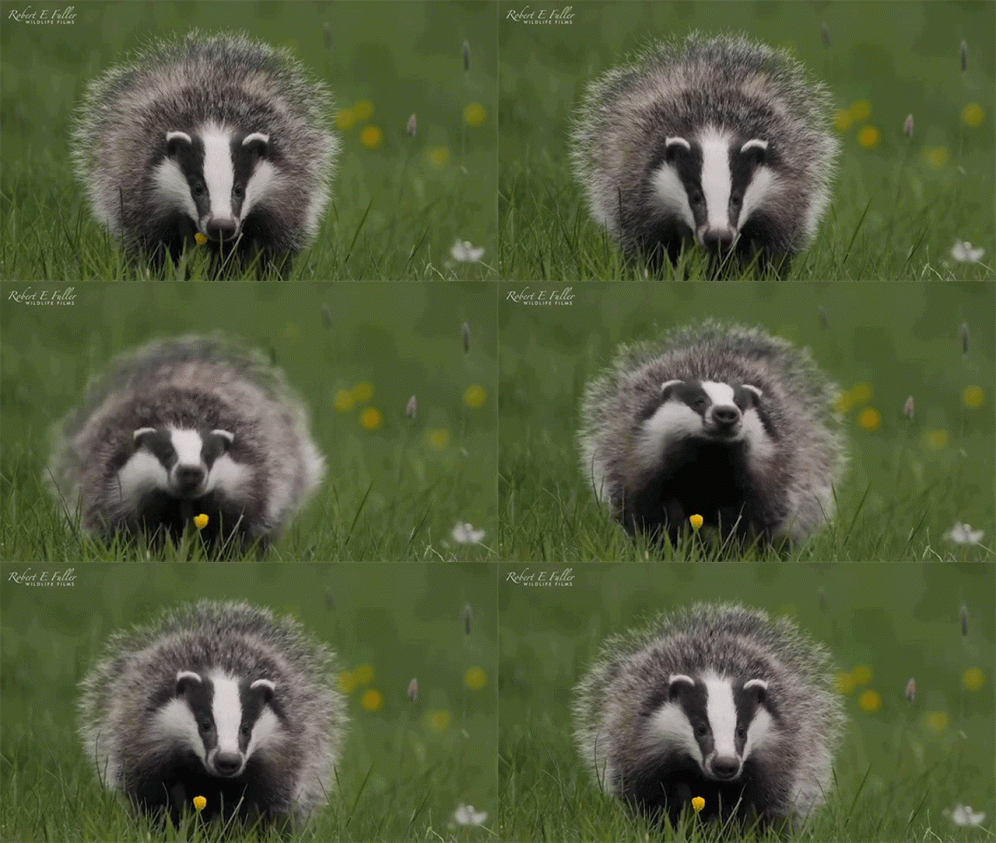
Itโ€™s #TautonymTuesday! Meet ๐‘€๐‘’๐‘™๐‘’๐‘  ๐‘š๐‘’๐‘™๐‘’๐‘ , the European #badger. This powerful mustelid ranges across much of Europe and W Asia, With a bold blackโ€‘andโ€‘white facial stripes and stocky build, it's a strong digger and adaptable omnivore living in woodlands and farmlands. #TaxonomyTuesday #Systematics

a badger is standing in a field with robert e. fuller wildlife films written on the bottom

ALT: a badger is standing in a field with robert e. fuller wildlife films written on the bottom

media.tenor.com

Last week, a production team came to CSU Long Beach to film a sit-down interview for a documentary on wildlife living in Los Angeles. Hopefully, they got some good material, and the plan is to go out and film some skunks in the field later this spring!

BildBild

#TautonymTuesday is back! Meet ๐‘†๐‘ก๐‘’๐‘™๐‘™๐‘–๐‘“๐‘’๐‘Ÿ ๐‘ ๐‘ก๐‘’๐‘™๐‘™๐‘–๐‘“๐‘’๐‘Ÿ, the little croaker, a small sciaenid fish found along the Atlantic coasts of S America. It inhabits shallow coastal waters and estuaries, where it schools in softโ€‘bottom habitats rich in invertebrate prey. #TaxonomyTuesday #Systematics

Bild

New paper out with Nicole Lopez showing that predation risk, male horn size, and female territoriality drive the evolution of and investment into female horns! "Territoriality, sociality and male weaponry shape horn investment in female bovids": academic.oup.com/beheco/artic...

Territoriality, sociality and male weaponry shape horn investment in female bovids

Female weaponry remains underexplored across animal taxa. We analyzed socio-ecological predictors of female horn presence and size within the mammalian fam

academic.oup.com

Itโ€™s #TautonymTuesday! Meet ๐ถโ„Ž๐‘–๐‘›๐‘โ„Ž๐‘–๐‘™๐‘™๐‘Ž ๐‘โ„Ž๐‘–๐‘›๐‘โ„Ž๐‘–๐‘™๐‘™๐‘Ž, the short-tailed #chinchilla. Native to the high #Andes , this species is built for cold mountainsโ€”with the densest of any land mammal, compact bodies, and strong hind legs for navigating rocky slopes. #TaxonomyTuesday #Systematics Photo: Britannica

Bild

Itโ€™s #TautonymTuesday! Meet ๐ต๐‘Ž๐‘Ÿ๐‘๐‘Ž๐‘ก๐‘ข๐‘™๐‘Ž ๐‘๐‘Ž๐‘Ÿ๐‘๐‘Ž๐‘ก๐‘ข๐‘™๐‘Ž, the stone loach. This small benthic #fish inhabits cool, fast-flowing streams across Europe and western Asia. They live on the bottom, often partly buried. A classic tautonym in freshwater ichthyology! #Systematics #TaxonomyTuesday Photo: Holger Krisp

Bild